Tuesday, June 30, 2026
spot_img
Home Blog Page 121

Global licensing industry increases to $271.6 Billion in 2017: Report

The retail and related revenue generated globally by the trademark licensing business increased to USD 271.6 Billion in 2017, according to the Annual Global Licensing Industry Survey by the International Licensing Industry Merchandisers’ Association (LIMA).

According to the report, the licensing industry increased by 3.3 per cent as compared to previous year to USD 262.7 Billion. Royalty revenue from sales of licensed merchandise and services grew to 2.6 percent to USD14.5 billion.

Character and Entertainment, being the top licensing type, garnered 44.7% share of the market, accounting for USD 121.5 billion; followed by Corporate Trademarks with its market share declining very slightly from last year to 20.5% of total retail revenues, to USD 55.8 billion.

Fashion garnered USD 32.1 billion while sports got slightly better from last year and stands at a 9.75% share accounting for USD 26.5 billion.

Apparel, toys, and fashion accessories continue to account for the largest shares of the business, the report further stated.

As per the LIMS report, Casino gaming/lotteries increased by 9.6 percent. Home-related categories, infant, and video games/software/apps showed growth higher than the overall 2017 average.

United States and Canada remain the largest market for licensed merchandise and services, with revenue accounting for 58 percent of the global total. However, the strongest growth was driven from North Asia (up 6.2 percent) and Latin America (up 7.6 percent), primarily driven by growth in China/Hong Kong, Japan, and Brazil.

LIMA is the leading trade organization for the global licensing industry.  Founded in 1985, LIMA’s mission is to foster the growth and expansion of licensing around the world, raise the level of professionalism for licensing practitioners, and create greater awareness of the benefits of licensing to the business community at large.

Sony to become world’s largest music publisher, buys EMI for $2.3 billion

0

The Japanese Technology and content giant Sony Corporation said on Tuesday it would pay about USD 2.3 billion to gain control of EMI, becoming the world’s largest music publisher.

According to a Reuters report, the acquisition will give Sony a music portfolio of over 2 million songs from artists including Kanye West, Sam Smith, and Sia.

The deal is part of new CEO Kenichiro Yoshida’s mission to make revenue streams more stable with rights to entertainment content.

Currently, Sony owns about 30% of EMI. After the deal, it will give the company control of another 60%, bringing its total control of EMI to 90%.

Yoshida, who took the charge in April, also beefed up Sony’s content offerings this month with a $185 million deal to take a 39 percent stake in Peanuts Holdings, the company behind Snoopy and Charlie Brown.

DHX Media and Sony Music Entertainment had announced that they have entered into a definitive agreement whereby SMEJ will indirectly purchase 49% of DHX Media’s 80% interest in Peanuts for C$237 million (US$185 million) in cash, subject to customary working capital adjustments.

Pro forma for the transaction, DHX Media will own 41% of Peanuts, SMEJ will own 39%, and the members of the family of Charles M. Schulz will continue to own 20%.

The company said it aims to generate a total of 2 trillion yen ($18 billion) or more in cash flow over the next three years, up by at least a third from the previous three years.

The deal values EMI Music Publishing at $4.75 billion including debt, more than double the $2.2 billion value given in 2011 when a consortium led by Sony won bidding rights for the company.

US abolishes federal ban on sports betting: Is ‘acche din’ on the cards for India?

In what could be termed as a major announcement for sports fans, the US Supreme Court in a majority verdict in Murphy (Governor of New Jersey) versus National Collegiate Athletic Association abolished the Professional and Amateur Sports Protection Act, 1992 (PASPA) on May 14.

PASPA was a federal legislation that prevented states from promoting, operating, licensing and authorizing sports betting.

Under the above-mentioned law, all but four US states were barred from permitting sports betting. The Supreme Court, on the basis of the violation of ‘anti-commandeering’ principle, ruled out the act.

The 49-page decision is the culmination of a five-year battle that cost the state of New Jersey upwards of $8 million.

According to media reports, apart from the state of New Jersey, ten or more other states are looking to immediately pass legislations to regulate, license and tax sports betting.

While it is great news for sports enthusiasts, it is still not a free and open market. The court did not address the following things:

  • The law did not legalize nationwide sports betting
  • It did not permit for anyone to open a sportsbook
  • It did not legalize sports bets to offshore accounts
  • It does not address daily fantasy sports

The historic decision of making changes in sports betting law is sure to have implications for the gaming industry, globally. However, it would be worthwhile to examine whether the directive would have any implications on the move to get sports betting legalized in India.

Is ‘acche din’ on the way for sports enthusiasts in India?

The Indian constitution is a quasi-federal one, where the centre has more power over the states.

The Indian constitution does not follow the strict federal model like the United States of America. Federalism is a system of government in which a written constitution divides power between a central government and regional or sub-divisional governments. Both types of government act directly upon the people through their officials and laws.

Thus, the anti-commandeering principle may not have much significance.

Under Entry 34 of the state list, it is clear that state legislatures have the power to regulate gambling and betting activities.  However, the parliament has the authority to exercise control on state subjects in the following scenarios.

  • If two or more state legislatures specifically request it to do so
  • In pursuance of an International treaties
  • If it is required to be done for a limited period of time in national interest

Apart from the aforementioned situations, the centre can intervene in the inter-state trade and commerce (entry 42) and/or communication (entry 31) to regulate online sports betting.

Further, unlike the American constitution, the subjects which the parliament and state legislatures can regulate are well enumerated in the seventh schedule of the Indian constitution.

The Law Commission of India had been examining the issue for over a year and a half now. Earlier, a petition was also filed by Geeta Rani a year ago before the apex court, which urges to issue directions to the central and state governments to regulate sports betting.

The US court decision might boost the case in Indian counterparts. However, owing to various socio-economic conditions of India, people have to wait before the government can legalize sports betting in the country.

Amid the path breaking decision by the US Supreme Court, sports betting legalization still remains an unfinished task in India.

To celebrate 20th anniversary, Mattel to launch ‘The Powerpuff Girls’ inspired Barbie fashions

To celebrate 20th Anniversary of the Powerpuff Girls, Cartoon Network Enterprises has tapped global toymaker Mattel to create a range of Barbie fashions inspired by the tiny supergirls.

Recently, Barbie, from the house of Mattel Toys, launched an India-exclusive collection of dolls inspired by several cultural aspects. The collectibles, from the Colours of India series, witnessed Barbie in six different avatars, uniquely inspired by six heritage sites across the country.

The announcement comes at the beginning of Licensing Expo, held in Las Vegas from May 22-24. To commemorate the event, new episodes, events and products will roll-out throughout the year and continue until 2019.

Meanwhile, Champion will also launch a collection of The Powerpuff Girls in limited-edition fleece and heritage silhouettes for autumn this year.

Elsewhere, Mondo T’s will introduce a variety of The Powerpuff Girls pin and high-end prints and the LEGO Group will introduce new building sets in August.

Licensing partners for ‘The Powerpuff Girls’ in Latin America will expand to various places including Havaianas in Brazil. Havaianas will launch a variety of Powerpuff Girls-inspired shoes for both kids and adults in Brazil, beginning in July 2018. Cremer will offer The Powerpuff Girls personal care products in Brazil starting this month.

As the original ambassadors of girl power, the iconic brand has been inspiring generations of girls and young women since its initial launch in November 1998. From the moment Blossom, Bubbles and Buttercup started to save the world before bedtime, they became more than just characters on a show, but a global phenomenon with a message of empowerment that still resonates 20 years later as a re-imagined series debuted in 2016.

Joan Smalls launches swimwear capsule collection with Smart&Sexy

Supermodel Joan Smalls has launched her first collection of swimwear and intimate apparel with celebrated lingerie and swimwear company ‘Smart&Sexy’.

Inspired by her tenure on the runway and her personal style; the pieces are a combination of sporty and elegant, comfortable and chic, bold and simplistic.

“From concept to creation, my goal was to create beautiful pieces, with a variety of sizes, all at affordable prices,” said Smalls on the association.

Swimwear collection includes crop and triangle bikini tops, cheeky and French cut bikini bottoms, one-piece swimsuits and fishnet cover-ups in an array of neon and neutral colors.

Available in all sizes from S-XXL, the prices of the products start from $24.

Ariela Esquenazi founded Ariela & Associates in 1997 as an intimates manufacturer before launching Smart&Sexy in 2007.

Ariela & Associates is Walmart’s largest bra supplier and one of their largest women-owned suppliers.  Smalls & Esquenazi first worked together for the launch of the Smart&Sexy Swim Secret Collection in 2017.

“Joan has such a great eye for design and such eclectic taste. There is something for everyone to enjoy in this collection,” said Esquenazi.

Smart & Sexy is the in-house brand for Ariela & Associates International which was founded over 20 years ago.

The collection is available online on smartandsexy.com as well as in select Walmart stores. The intimates’ collection is set to launch in July 2018.

#HowThingsWork: Understanding Zara’s ‘Fast-Fashion’ Business Strategy

0

Described as a company that will ‘change retail scenario forever’, Zara has revolutionized the world of fashion by bringing out a large number of collections each season, instead of the same old two collections every year.

Zara is one of the largest Spanish clothing and accessories retailer based in Arteixo, Galecia, founded in 1975 by Amancio Ortega and Rosalia Mera. The first store provided the customers with low- priced products, this gained popularity and became successful, that’s how a chain of stores was opened throughout Spain. Zara is a vertically integrated retailer, controlling the design, supply chain, distribution and manufacturing of its products worldwide. It has 6,500 stores across 88 countries.

Unfolding Zara’s Business Model:

Zara produces where it sells and utilizes a very tight supply chain from initial design through to final production. This allows the company adapt to new fashion trends and ideas within two weeks. As a result, short lead times for new products and fast replenishes of sold-out merchandise, are being made possible.

Zara manages to design, produce, distribute and sell its collections in a mere four weeks.

Business and Strategy:

Zara uses a push-based model which means factories push out product to stores which is then sold to consumers; there is no customization or products being made to order.

Also, termed as a ‘Fast Fashion’ model, Zara’s business strategy is simple and straight. The main agenda is to roll-over the inventory at such a fast pace that customers are actually scared that if they like anything and didn’t buy it immediately, it will not stay till the next visit.

Tip: Never thought of doing window shopping at Zara outlets, you might end up losing your favourite crop top. Take ample amount of money with you…

They maintain this continuous loop:

  • Fashion Spotting Based on New Trends
  • Design
  • Production in factories
  • Ship to stores
  • Sell to Consumers
  • REPEAT

Production and Supply Strategy:

Zara has limited production seasons and a high turnover of products. They change every 15 days. So, Zara manages to save on its warehousing and inventory costs in every shop worldwide.

The designer team has over 200 professionals, 12,000 different models for the sale in stores. Zara adopts a centralized distribution system, where garments (in-house and purchased from vendors) arrives at Zara’s warehouses in Spain, and then delivered worldwide.

 Design Strategy:

Instead of designing a collection long ahead of its release, Zara tries to continuously recognize emerging fashion and incorporate them in its designs and products. Through sales data capture and shopper anecdotal feedback, store managers daily report tens of thousands of customer reactions to design teams. Sale trends are analyzed along to runway releases and quickly incorporated into the next line of production, creating a cycle of iteration and innovation. Once designed, new fashions are produced in relatively small quantities, so “misses” can be quickly identified and discontinued and “hits” built-upon and re-released.

Zara uses Asian manufacturers to produce clothing staples such as plain t-shirts, which are not sensitive to fashion trends and the use of lower-wage labour with larger contracts makes sense.

Promotional Strategy:

Zara does not use advertising to promote its brand, which is uncommon in the retail world. Zara’s success has been achieved without resorting to any advertising campaigns. To spread the word about the company, it depends on word of mouth and on its landmark retail outlets in high-end locations. It spends a meagre 0.3 per cent of sales on advertising compared to an average of 3.5 per cent by competitors.

Location Strategy:

Zara uses its store location and store displays as key elements of its marketing strategy. By choosing to be in the most prominent locations in a city, Zara ensures very high customer traffic for its stores. Its window displays, which showcase the most outstanding pieces in the collection, are also a powerful communication tool designed by a specialized team.

Logistics Strategy:

Distribution takes place twice a week to ensure store inventories are constantly kept fresh and unique.  The logistics system ensures that the time between receiving an order at the distribution center to the worldwide delivery of the goods in the store is completed within 2 business days.

Distribution management:

Zara’s state-of-the-art distribution facility functions with minimal human intervention. Optical reading devices sort out and distribute more than 60,000 items of clothing an hour.

Going ‘Tech’ way…

Shoppers can swipe garments along a floor-to-ceiling mirror to see a hologram-style image of what they’d look like as part of a full outfit in Zara’s new flagship store in London.

Moreover, every garment is fitted with a radio-frequency identification tag. The technology lets Zara check a store’s inventory in two hours, a process that used to take about three days.

Robot arms get garments into shoppers’ hands at online-order collection points. iPad-wielding assistants also help customers in the store order their sizes online, so they can pick them up later.

Remember the shopping mall in the movie “Love Story 2050”? Looks like Indians may not have to wait till 2050 to witness the futuristic experiences.

With a very entrepreneurial culture at office, Zara’s brand culture is extremely customer-centric, which has been and continues to be a significant contributor to Zara’s success.

Epic Games chooses IMG for consumer products licensing for ‘Fortnite’

0

Epic Games, the game developer and publisher of the popular Fortnite game franchise, has selected IMG to be its exclusive worldwide agency for consumer products licensing and promotions.

Mark Rein, Vice President of Epic Games said, “Our players want Fortnite things so badly that they’re making their own stuff! We love that passion and think the time is right to provide them with official, high-quality products. There’s no better company than IMG to help us do that.” 

Founded in 1991, Epic Games is the creator of Fortnite, Unreal, Gears of War, Shadow Complex, and the Infinity Blade series of games. Epic’s Unreal Engine technology brings high-fidelity, interactive experiences to PC, console, mobile, AR, VR and the Web.

Bruno Maglione, President of IMG Licensing said, “Fortnite has captured the imagination of people around the world and has the most amazing universe of environments, tools and heroes to inspire products of all kinds. We are looking forward to providing Fortnite’s growing community of fans a great range of creative items that reflect the game’s attitude and brand DNA.”

IMG is a global leader in sports, fashion, events and media, operating in more than 30 countries. IMG also specializes in sports training and league development, as well as marketing, media and licensing for brands, sports organizations and collegiate institutions.

Torrid launches Jurassic World-inspired apparel collection

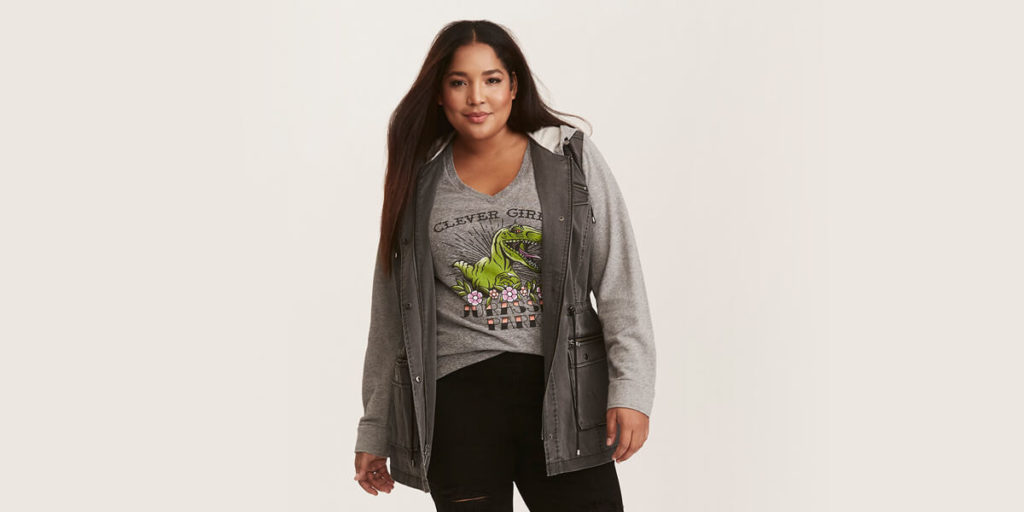
Fashion powerhouse Torrid has launched Jurassic World apparel collection in partnership with Universal.

The Jurassic World collection is inspired by the highly-anticipated movie ‘Jurassic World: The Fallen Kingdom’ and pays homage to the original empire in select designs.

The 12-piece capsule collection features a hooded anorak, midi skirt, a variety of t-shirts, among others.

The prices of the products range from $32.90 – $64.90.

With sizes ranging from 10 to 30 (US) this collection is available exclusively online on Torrid.com, with some selected items making their way into 350 Torrid stores nationwide.

Earlier, Torrid had collaborated with Star Wars and Hello Kitty for exclusive merchandises.

‘Jurassic World: The Fallen Kingdom’ premieres in theaters on June 22.

Barack and Michelle Obama to produce shows, sign Netflix deal

0

After White House legacy, the power couple is back and how! The former US President Barack Obama and former first lady Michelle Obama, have struck a multi-year deal to form their own production company and provide content to Netflix.

The deal will give the former first couple a powerful and unprecedented platform to shape their post-White House legacy.

However, financial terms were not disclosed yet. The Obamas also gave no details of the topics they planned to cover but the content is not expected to be directly political.

Under the imprint ‘Higher Ground Productions’, the Obamas have the option to produce scripted and unscripted series, documentaries and feature films, Netflix said in a statement.

“Michelle and I are so excited to partner with Netflix – we hope to cultivate and curate the talented, inspiring, creative voices who are able to promote greater empathy and understanding between peoples, and help them share their stories with the entire world,” the former president said in the Netflix statement.

According to media report, the first of the programming is expected to reach viewers in May 2019.

“Barack and I have always believed in the power of storytelling to inspire us, to make us think differently about the world around us, and to help us open our minds and hearts to others,” Michelle Obama said. “Netflix’s unparalleled service is a natural fit for the kinds of stories we want to share, and we look forward to starting this exciting new partnership,” she further stated.

The agreement between the Obamas and Netflix, which boasts some 125 million subscribers worldwide, is a first for any occupant of the White House.

Himatsingka acquires exclusive licensing rights for Tommy Hilfiger Home

0

Himatsingka America, the wholly-owned step-down subsidiary of Bengaluru-based textile company Himatsingka Seide Ltd (HSL) has acquired the home portfolio of Global Brands Group Holding.

The acquired home portfolio includes the exclusive license rights to the famous and iconic Tommy Hilfiger brand, the Copper Fit brand and other brands. The brand portfolio is estimated to contribute annual revenues of approximately USD 60-65 million to the group, the company said on Friday.

Headquartered in Hong Kong, Global Brands Group Holding is a branded apparel, footwear and fashion accessories company. It designs, develops, markets and sells products under a diverse array of owned and licensed brands and a wide range of product categories on a global scale.

Founded in 2004 and based in New York, Himatsingka America engages in the distribution of silk and silk-blended yarns and yarn dyed decorative, bridal, and fashion fabrics.